What Is the Waffle Word Puzzle?
The Waffle word puzzle is a daily word game where players solve a scrambled grid of letters by swapping tiles until six correct words appear. The puzzle takes place on a distinctive waffle-shaped grid, which is designed in a 5×5 layout where certain spaces are removed to resemble the pattern of a waffle. Within this grid, players must create three horizontal words and three vertical words, all intersecting with one another.
At the beginning of each puzzle, the letters needed to form the correct words are already present in the grid, but they are placed in the wrong positions. Your task is to rearrange these letter tiles by swapping them strategically until every word reads correctly both across and down. Because the puzzle contains intersecting words, a single letter can contribute to more than one word, which makes careful thinking essential.
The challenge becomes even more interesting because the game gives players a limited number of swap moves to solve the puzzle. Every move counts, and efficient tile swapping helps you finish with the best possible score. This simple concept is what makes the waffle puzzle game both approachable for beginners and satisfying for experienced puzzle lovers.
How the Waffle Puzzle Grid Works
To understand how waffle game works, it is important to first become familiar with the structure of the waffle grid. The puzzle is arranged in a 5×5 board, but not every square contains a letter. The design forms a waffle-like pattern where the letters appear only in the positions that build the horizontal and vertical words.
Within this grid, there are six total words hidden in the puzzle. Three of them run horizontally from left to right, while the other three run vertically from top to bottom. Because the words intersect at several points, certain letter tiles belong to both a horizontal and a vertical word. These shared letters are crucial when solving the puzzle because placing them correctly can help complete multiple words at once.
At the start of the game, the grid already contains all the letters needed to solve the puzzle. However, they are placed randomly across the board. Players must examine the letter positions, recognize potential word patterns, and begin swapping tiles to gradually build the correct words.
This structure makes the waffle word game very different from many other puzzles. Instead of guessing new letters, you work entirely with the letters already on the board. The real challenge comes from understanding how each letter interacts with the surrounding words and how a single swap can bring the puzzle closer to completion.
Why the Waffle Game Is So Popular
One of the main reasons the Waffle Game has captured the attention of puzzle enthusiasts is its unique combination of logic, vocabulary, and strategy. Unlike traditional word games where you guess letters, the waffle puzzle provides all the letters upfront, and your challenge is to rearrange them within the 5×5 grid to form six correct words. This intersecting design, with horizontal and vertical words sharing letters, creates a satisfying balance between challenge and solvability. Players enjoy how each swap feels meaningful, as a single move can bring multiple words closer to completion. The daily format adds an extra layer of engagement, giving players a fresh puzzle every day and making it easy to build a consistent word puzzle habit.
What Makes the Waffle Puzzle Different From Other Word Games
One reason the waffle puzzle has gained popularity is that it offers a unique twist on traditional word games. Instead of asking players to guess a hidden word, the puzzle gives you all the letters from the start. The challenge lies in organizing them correctly within the waffle grid.
This mechanic creates a gameplay experience that combines elements from several familiar puzzles. Like a crossword puzzle, the words intersect with each other, meaning every letter must fit both directions. At the same time, the game encourages the same kind of pattern recognition and vocabulary skills found in other word puzzle games.
Another feature that sets the waffle word puzzle apart is the tile swapping mechanic. Rather than typing guesses, players must carefully swap two letters at a time to move them closer to their correct positions. Each swap changes the layout of the grid and can reveal new word possibilities.
Because every puzzle already contains the correct letters, solving it becomes a logical challenge rather than a guessing game. This makes the puzzle satisfying for players who enjoy solving patterns and identifying word structures.
Why Players Love the Daily Waffle Challenge
The daily waffle puzzle format is another reason why the game continues to grow in popularity. Every day, a new puzzle appears, giving players a fresh challenge to solve. Since everyone receives the same puzzle, many players enjoy comparing their solutions and scores with friends or other puzzle enthusiasts.
Another appealing aspect of the game is its balanced level of difficulty. The rules are simple enough for beginners to understand, yet the puzzle still requires careful thinking to solve efficiently. Players often try to complete the puzzle using the fewest swap moves, which adds an extra layer of strategy to the experience.
For many people, solving the waffle word game has become a quick daily habit. It only takes a few minutes to play, yet it provides a satisfying mental workout that exercises vocabulary, logic, and pattern recognition. Over time, regular players begin to recognize common word structures and develop faster ways to approach each puzzle.
How to Play the Waffle Game
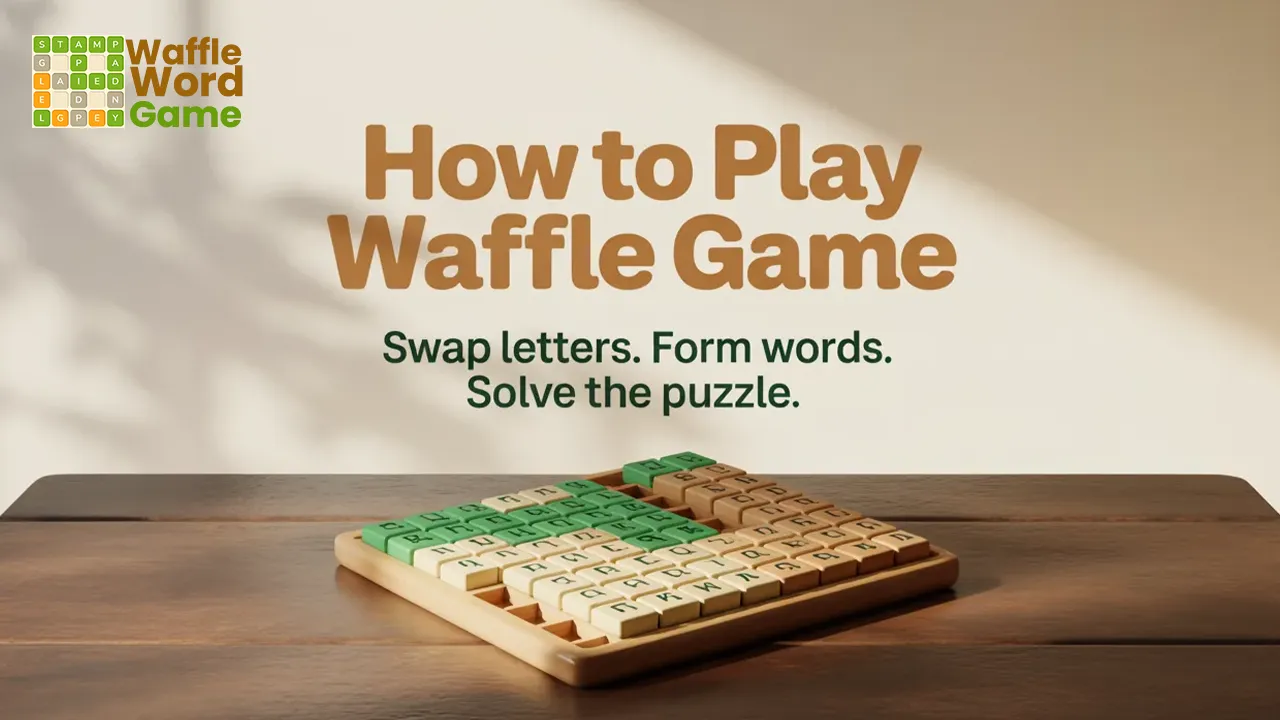
Learning how to play waffle game becomes easy once you understand the basic objective of the puzzle and how the grid functions. The game begins with a 5×5 waffle grid filled with scrambled letter tiles. All the letters needed to solve the puzzle are already placed on the board, but they appear in the wrong positions. Your task is to rearrange these letters by swapping tiles until every word in the grid becomes correct.
The puzzle always contains six words in total. Three words run horizontally from left to right, and three words run vertically from top to bottom. Because the words intersect at multiple points, each shared letter must fit correctly in both directions. This makes every move meaningful, since changing one letter position can affect more than one word.
Players solve the puzzle by selecting two tiles and swapping their positions. Each swap counts as a move, and the game provides a limited number of puzzle moves to finish the grid. The goal is not only to complete the puzzle but also to solve it using the fewest swaps possible. When all the horizontal words and vertical words are correctly formed, the puzzle is complete.
Understanding this simple mechanic is the key to mastering the waffle word puzzle. Once you recognize how letters interact inside the grid, it becomes easier to plan your swaps and move closer to the correct solution.
Step-by-Step Guide to Playing Waffle
Before diving into each step, it’s important to understand that solving the waffle puzzle game is all about observing patterns and planning your moves carefully. By taking a moment to study the grid, you can identify which letters are already in the correct position and map out your strategy for completing all six words efficiently. These steps are also similar for waffle unlimited & deluxe mode.
Step 1: Study the Starting Grid Carefully
The first step when playing the waffle puzzle game is to carefully examine the grid before making any moves. At the beginning, the letters may appear randomly arranged, but many of them are already close to their correct positions. Taking a moment to observe the layout can help you identify possible word patterns.
Look at both the horizontal rows and the vertical columns to see if any familiar words begin to appear. Sometimes a few letters will already form a recognizable word structure. Recognizing these early clues can help you determine where certain letters should move.
It is also helpful to notice which letters appear in multiple potential word combinations. Since the puzzle contains intersecting words, placing one letter correctly can bring you closer to completing two words at the same time.
Step 2: Identify Letters That Are Already Correct
After studying the grid, the next step is to find letters that are already positioned correctly within the waffle grid. These letters serve as important anchors for solving the puzzle because they help you build the rest of the words around them.
When a letter appears to be part of a recognizable word in both the horizontal and vertical directions, it is likely close to its correct location. Keeping these letters in place allows you to focus on rearranging the remaining tiles more effectively.
Correctly placed letters also help reduce the number of possible swaps you need to make. Instead of experimenting randomly, you can concentrate on moving the misplaced tiles toward the positions where they complete the correct words.
Step 3: Swap Letter Tiles Strategically
The main action in the waffle word game is swapping tiles to move letters closer to their correct positions. Each swap exchanges the positions of two letters in the grid. Since the puzzle limits the number of available moves, every swap should be made with a clear purpose.
Instead of swapping letters randomly, try to visualize where each letter should ultimately go. If you notice that two letters belong in each other’s positions, swapping them immediately can correct two placements at once. This kind of efficient move can save valuable swaps.
Strategic swapping becomes even more effective when you focus on letters that appear in both a horizontal word and a vertical word. Moving these shared letters correctly often helps complete more than one word simultaneously.
Step 4: Build Both Horizontal and Vertical Words
As you continue swapping tiles, your main goal is to gradually build the six words hidden in the puzzle. Three of these words appear horizontally, while the other three appear vertically. Because the words intersect, solving one word can help reveal letters needed for another.
When a horizontal word begins to form clearly, check how its letters interact with the vertical words crossing through it. If those shared letters also fit the vertical pattern, you are likely moving in the right direction.
This stage of the puzzle requires careful observation and logical thinking. Each new swap should bring the grid closer to a complete set of valid words. With each correctly placed letter, the structure of the waffle puzzle becomes easier to understand.
Step 5: Solve All Six Words Within the Move Limit
The final step in learning how to play the waffle game is completing the grid within the allowed number of moves. As the puzzle nears completion, only a few tiles will remain out of place. At this stage, a single well-planned swap can finalize the last word combinations.
Finishing the puzzle successfully means that all horizontal words and vertical words in the grid form correct dictionary words. Once this happens, the waffle puzzle is solved.
Players often try to complete the grid using the smallest number of swaps possible. The fewer moves you use, the higher your score will be. This scoring system encourages players to think carefully about each move and develop smarter strategies over time.
Mastering these steps allows anyone to confidently approach the daily waffle puzzle and solve it more efficiently with practice.
Beginner Tips for Solving Waffle Puzzles Faster
Even though the waffle word game is simple to understand, new players often need a little practice before they can solve the puzzle efficiently. A few smart habits can make the process smoother and help you complete the daily waffle puzzle using fewer moves. By approaching the puzzle with a clear method, you can gradually improve your solving speed and accuracy.
Start With Letters That Are Already Correct
One of the easiest ways to begin solving a waffle puzzle is to focus on letters that appear to be in the correct position. These letters often form the foundation of a word and can guide you toward the correct solution. When a letter clearly belongs to both a horizontal word and a vertical word, it becomes an anchor point in the puzzle.
Keeping these letters in place allows you to concentrate on the remaining tiles that still need adjustment. As more letters fall into the correct positions, the rest of the grid becomes easier to interpret. This simple technique can help you avoid unnecessary swaps and preserve valuable puzzle moves.
Look for Easy Word Patterns
Another helpful strategy for beginners is to search for common word patterns within the waffle grid. Many English words share familiar structures, such as common prefixes, suffixes, or repeating letter combinations. Recognizing these patterns can quickly reveal the correct placement of certain letters.
For example, if you see letters that can easily form a known word pattern, try rearranging the surrounding tiles to complete that word first. Solving even one word correctly can give you strong clues for the remaining vertical and horizontal words. This approach makes the puzzle feel less random and more like a logical sequence of small steps.
Use Shared Letters Between Words
The intersecting design of the waffle puzzle game means that several letters belong to two words at the same time. These shared letters are extremely valuable when solving the puzzle because placing one correctly can help complete two different words.
When you identify a letter that seems important for both directions, try focusing your swaps around that position. Correctly placing these intersection letters often unlocks multiple parts of the puzzle at once. Over time, players begin to recognize how powerful these shared tiles can be when solving the waffle word puzzle efficiently.
Ways to Improve Your Waffle Puzzle Skills
As you continue playing the daily waffle puzzle, your ability to recognize patterns and plan swaps will naturally improve. However, there are several practical habits that can help you become faster and more confident when solving each grid.
Practice With Daily Waffle Challenges
The most effective way to improve at the waffle game is simply to play it regularly. Each new puzzle provides a fresh opportunity to observe letter patterns, test different strategies, and learn from previous mistakes. Over time, your brain becomes more familiar with common word structures, which makes solving the puzzle quicker.
Daily practice also helps you develop a better sense of how letters interact within the 5×5 waffle grid. As your experience grows, you will begin to recognize potential word combinations almost instantly.
Pay Attention to Word Patterns
Many experienced players solve waffle puzzles by identifying likely word combinations before making their first swap. Instead of reacting to each letter individually, they look at the entire grid and search for possible word formations.
By training yourself to notice these patterns, you can often determine where several letters belong before making any moves. This approach allows you to solve the puzzle with fewer swaps while maintaining control over the tile swapping process.
Plan Moves Before Swapping Tiles
One common mistake beginners make is swapping letters without thinking about the long-term result. While experimentation can sometimes work, the waffle word game rewards players who think ahead.
Before making a swap, try to imagine where each letter should eventually move. If a single swap can place two letters closer to their correct positions, it is usually a good move. Planning your swaps in advance helps you conserve moves and increases your chances of finishing the puzzle with a higher score.
Benefits of Playing the Waffle Word Game
Beyond being entertaining, the waffle puzzle game offers several cognitive benefits that make it a valuable daily activity. Many players enjoy the puzzle not only for the challenge but also for the mental stimulation it provides.
Improves Vocabulary and Word Recognition
Regularly playing the waffle word puzzle exposes you to a wide range of words and letter combinations. As you search for solutions, your brain becomes more familiar with spelling patterns and word structures. Over time, this can strengthen your vocabulary and improve your ability to recognize words quickly.
Because the puzzle requires you to think about both horizontal and vertical words, it encourages a deeper understanding of how letters form meaningful combinations.
Strengthens Logical Thinking
The puzzle also acts as a small exercise in logic and problem solving. Each swap changes the arrangement of the grid, forcing you to think about cause and effect. Deciding which letters to move and when to move them requires careful observation and reasoning.
These problem-solving skills are similar to those used in other logic puzzle games, which is why many players find the waffle challenge both stimulating and rewarding.
Provides a Fun Daily Brain Exercise
Perhaps the biggest benefit of the daily waffle puzzle is that it offers a quick and enjoyable mental workout. The puzzle can usually be completed in just a few minutes, making it an ideal activity during a short break or at the start of the day.
Despite its short playtime, the game engages several mental skills at once, including memory, vocabulary, pattern recognition, and logical reasoning. This combination makes the waffle puzzle a satisfying daily challenge for anyone who enjoys word puzzle games.
Final Thoughts
Learning how to play waffle game is simple once you understand the structure of the grid and the goal of forming six correct words. By carefully examining the waffle grid, swapping letter tiles strategically, and building both horizontal and vertical words, players can gradually transform the scrambled puzzle into a complete solution.
With practice, the process becomes faster and more intuitive. The more puzzles you solve, the easier it becomes to recognize word patterns and plan efficient swaps. Whether you are playing casually or trying to achieve the best possible score, the waffle word game offers an engaging mix of vocabulary, logic, and strategy that keeps players coming back for the next daily challenge.